
How to Clean and Maintain a Fiberglass Front Door
Fiberglass is one of the most durable front door materials available, but it is not maintenance-free. The finish that gives a fiberglass door its wood-grained look and UV resistance will degrade over time without basic care: fading, chalking, or peeling in ways that are slow at first and then suddenly obvious. A simple maintenance routine keeps that from happening and extends the life of the door significantly.
What Fiberglass Actually Needs (And Does Not Need)
One of the most common mistakes fiberglass owners make is treating the door like an exterior wood surface - applying oil-based conditioners, heavy-duty degreasers, or pressure washing it seasonally. Fiberglass does not need any of that. The protective gel coat and topcoat finish on a fiberglass door is damaged by harsh chemicals and abrasives, not helped by them.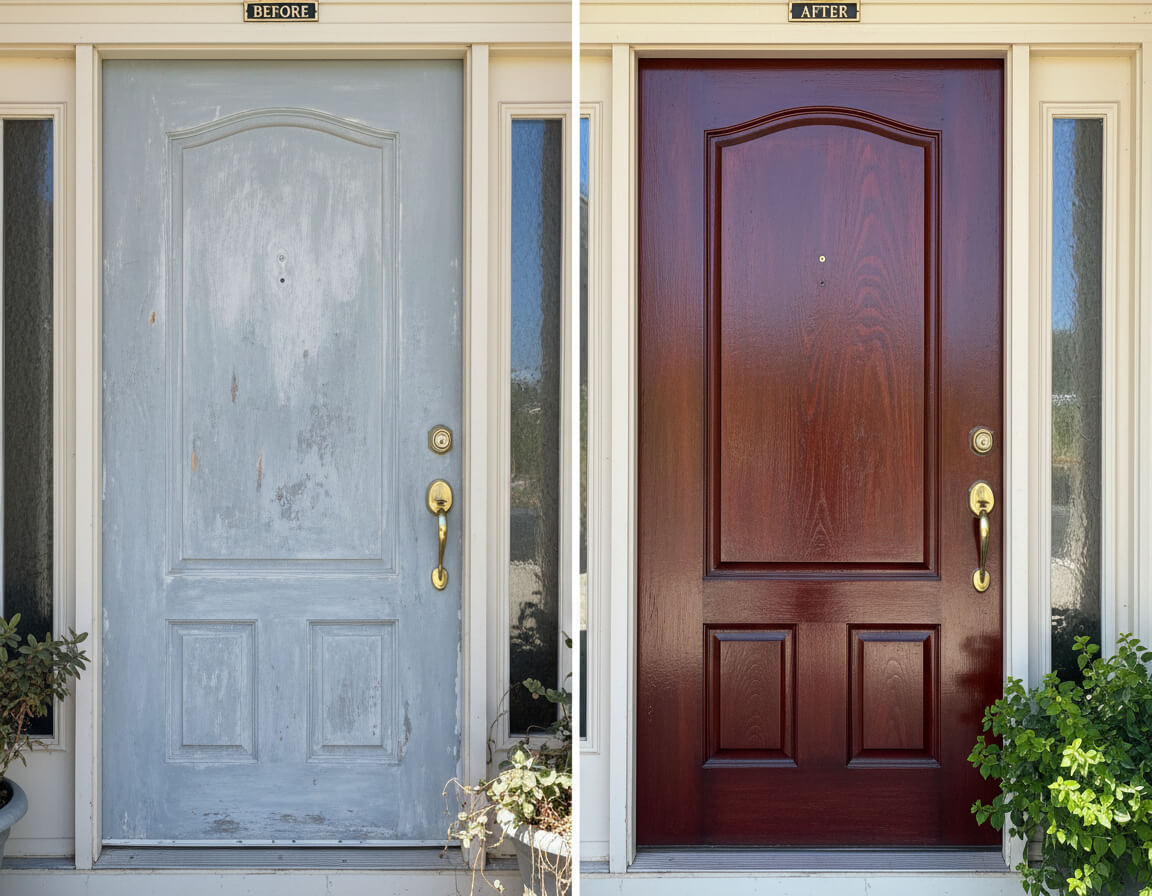
What the door does need is regular cleaning with mild soap and water, periodic UV protection, and an annual check of the weatherstripping, hardware, and finish condition. That is a manageable maintenance window compared to wood, which requires more aggressive seasonal attention to stay in good shape. The Knockety guide to fiberglass front door materials and construction explains why the finish system is the most important thing to protect. It is what separates a door that looks good for decades from one that fades within a few years.
Cleaning: What Works and What to Avoid
For routine cleaning, a solution of mild dish soap and warm water applied with a soft cloth or sponge is all that is needed. Work in sections, rinse with clean water, and dry with a soft towel to prevent water spots. Clean the door at least twice a year - spring and fall - and spot-clean as needed after storms or heavy pollen seasons.
Plastpro's guide to cleaning fiberglass doors recommends against pressure washing, steel wool, scouring pads, or solvent-based cleaners. These strip the protective coating, dull the finish, and accelerate UV damage. For stubborn stains or mildew near the threshold, a diluted white vinegar solution applied with a soft brush works without damaging the surface.
For a more detailed walkthrough of front door cleaning by material type, Knockety's guide to cleaning your front door covers the key steps for fiberglass, wood, and steel.
Protecting the Finish Against UV Damage
Sun exposure is the primary source of fiberglass door deterioration. On south- and west-facing entries without significant overhang shade, UV radiation breaks down the topcoat finish over time - causing the surface to fade, chalk, or lose its sheen. This happens faster with darker colors and factory-applied stained finishes than with painted finishes.
Framewell's overview of front door protection from sun and heat recommends applying a UV-protective paste wax or automotive-style polymer sealant to fiberglass doors once a year as part of a spring maintenance routine. Products designed for fiberglass surfaces - not wood conditioners or petroleum-based dressings - are the right choice. The treatment takes about twenty minutes and significantly slows finish breakdown.
Knockety's post on protecting your door from summer sun covers additional steps, including how storm doors and entryway overhangs can dramatically reduce UV load on the door surface.
Weatherstripping and Hardware
Maintenance does not stop at the door surface. Weatherstripping around the frame and the door sweep at the bottom are the most failure-prone components of any exterior door system. Inspect them annually for compression loss, cracking, or visible gaps. A door that seals well keeps conditioned air in and moisture out - both of which protect the door itself over time, not just the home's energy performance.
Hardware - handles, hinges, locksets - should be wiped clean with a dry cloth and checked for smooth operation. Exterior hardware is exposed to weather and dust, and seized or stiff hardware puts additional stress on the door and frame when operated.
When to Refinish
If the door surface is visibly faded, chalky to the touch, or showing peeling around the edges, a refinish is warranted. This is not a full replacement - it is a surface treatment that restores both appearance and UV protection. For stained fiberglass doors, gel stain applied by hand restores color and grain depth. For painted fiberglass, light sanding and a fresh coat of exterior latex returns the door to like-new condition.
Knockety's essential exterior door maintenance checklist covers when refinishing makes sense versus when damage has progressed to the point where replacement is the better value.
Knockety's fiberglass doors are engineered for long-term performance. But like any exterior surface, they reward a little attention each season. A twice-yearly cleaning and an annual UV treatment is usually all it takes to keep a well-made fiberglass door looking the way it did on installation day.