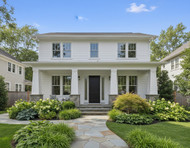
Black Front Doors: Why the Trend Has Lasted
Few design choices in home exteriors have shown the staying power of the black front door. What began as a signature of Georgian townhouses and Federal-style architecture centuries ago found a second life in the social media era, and it has not let go. Black doors now appear on new construction and renovations across every architectural style from craftsman to farmhouse to mid-century modern. The question worth asking is not whether black works, but when it works best, and when a different choice would serve you better.
Why Black Has Lasted
Black is one of the few door colors that operates as a neutral. It does not compete with brick, stone, wood siding, or painted clapboard - it anchors them. On a white or cream exterior, a black door creates a contrast that sharpens the entry without requiring any other changes. On a dark grey or navy exterior, it reads as a tonal choice that adds depth rather than contrast.
Benjamin Moore's front entrance design guide notes that black and near-black tones consistently rank among the most requested door colors precisely because they are finish-agnostic. They work in matte, satin, and gloss without looking dated in any of them. The same cannot be said for most statement colors.
There is also a financial argument. A widely-cited Zillow study found that homes with black front doors sold for up to $6,450 more than expected, making it one of the few cosmetic choices with a measurable return on resale. Whether the premium reflects buyer preference for black specifically or simply for a bold, intentional entry is open to interpretation, but the pattern holds.
Where It Falls Short
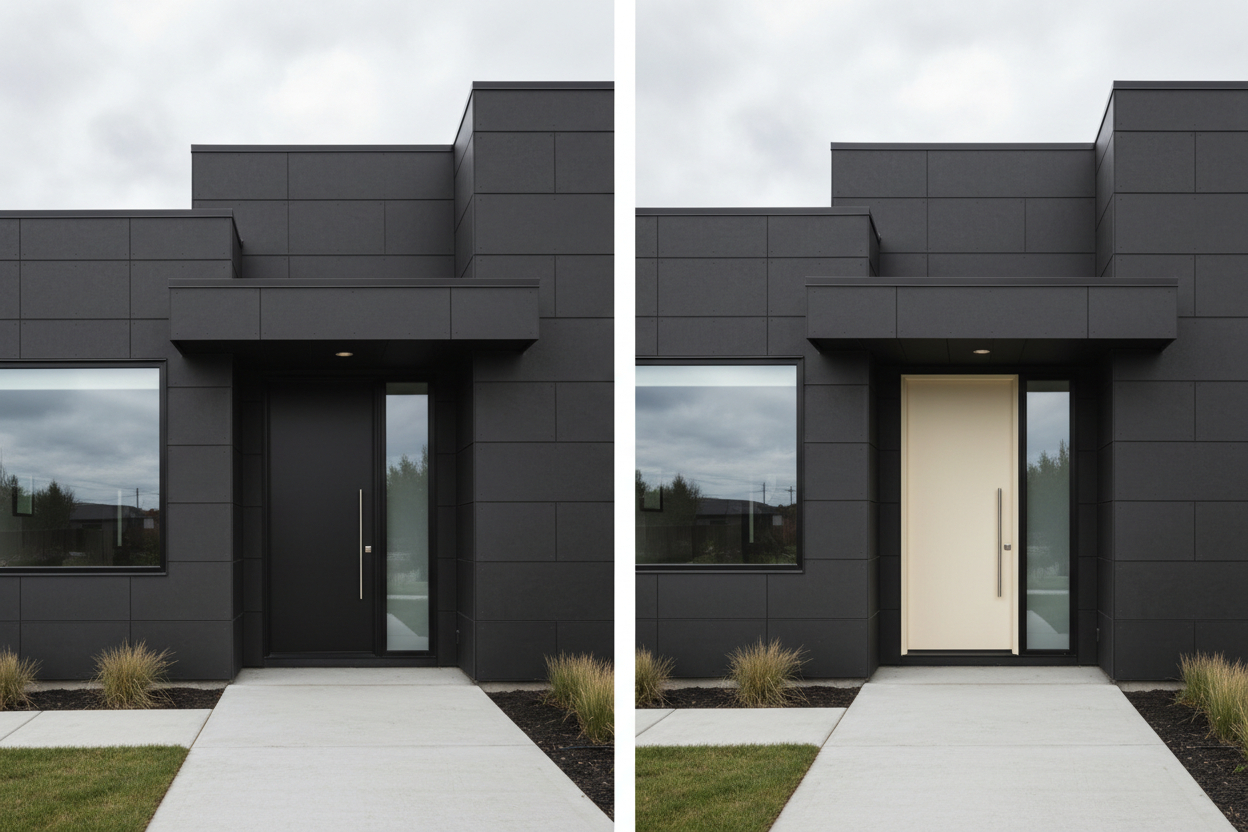
Black is not universally appropriate. On homes with dark exteriors - charcoal, deep brown, slate - a black door can disappear rather than anchor the entry. The contrast that makes a black door work on a light façade simply does not exist when the surrounding field is equally dark.
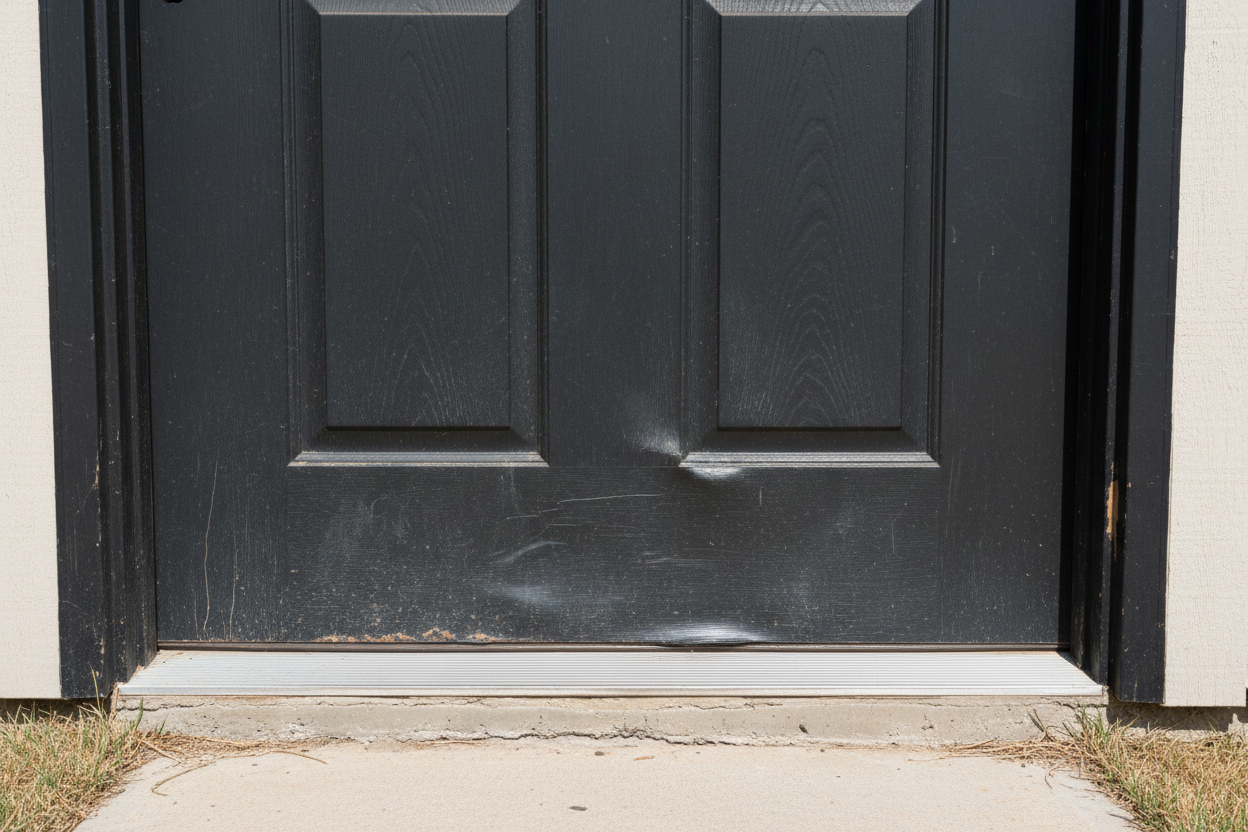
Black also absorbs more solar energy than lighter colors. On south- or west-facing entries, a black door will reach surface temperatures significantly higher than a grey or cream door in the same sun conditions. Over time, this accelerates finish breakdown, stresses weatherstripping, and can cause warping in doors that are not built for thermal stress. APRO's guide to front door colors for curb appeal highlights this specifically, noting that darker colors demand more from the door material and finish system - fiberglass and steel hold up better than wood under sustained heat.
When to Try Something Else
If your façade is dark, your entry faces full afternoon sun, or you simply want a color that feels more individual to your home and personality, there are strong alternatives that carry the same visual confidence as black without the limitations. Before you commit, you can order real finish samples or preview a Knockety door on a photo of your own entry.
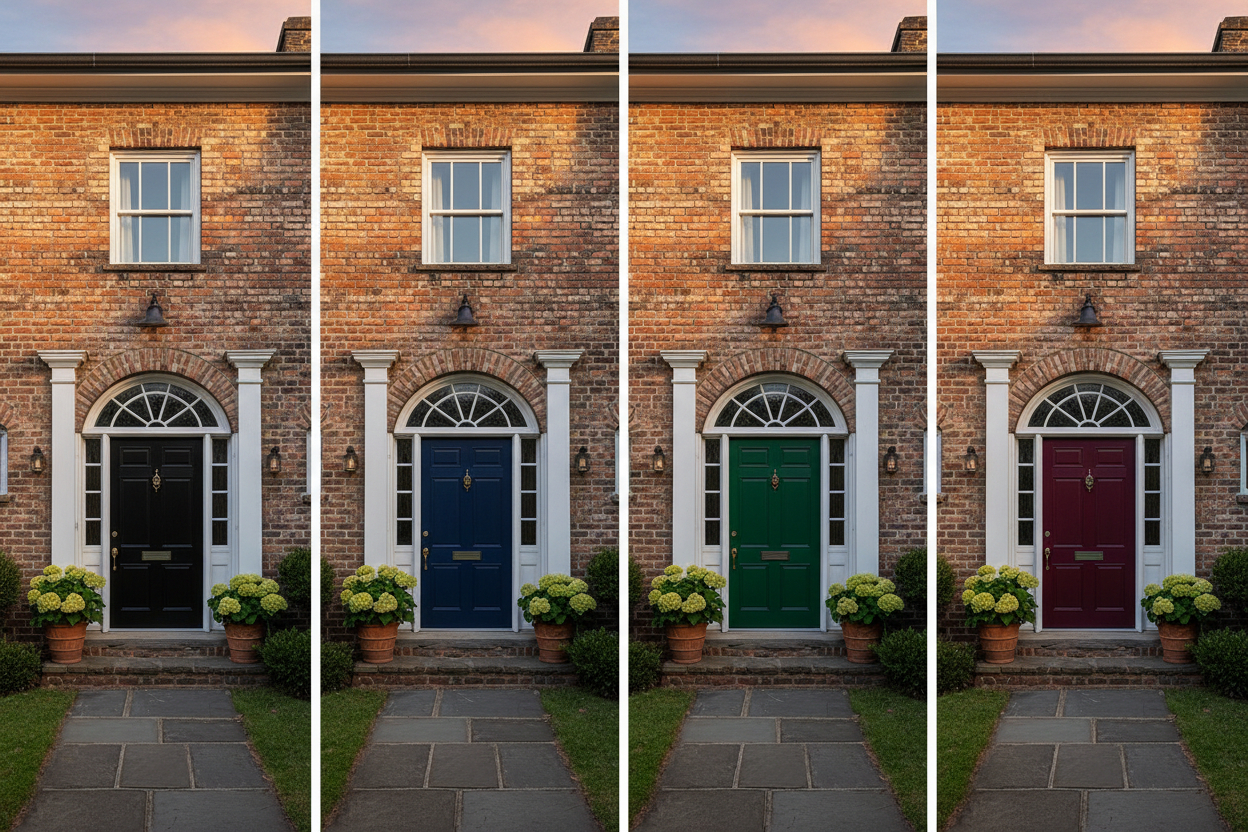
Deep navy is the closest natural successor to black. It reads as a near-neutral in most conditions but carries more warmth and character. It performs well on white, grey, and natural wood-toned exteriors and is one of the fastest-growing door colors in residential design.
Forest green has emerged strongly in recent years as a choice that feels grounded and current without leaning contemporary. It works especially well on craftsman, Tudor, and traditional styles where the color connects to the landscape rather than contrasting against it.
Burgundy and deep red are classics for brick exteriors particularly. Where black can feel stark against red brick, a deep wine or oxblood tone creates a warmer tonal relationship that suits traditional architecture naturally. Trimlite's spring curb appeal guide on bold front door colors makes the case for these warmer tones as an underused alternative that buyers respond to positively in the right architectural context.
Warm white and off-white on dark exteriors - the inverse of the classic formula - have gained traction on modern and contemporary homes as a high-contrast choice that reads as intentional rather than default.
Getting the Pairing Right
Whatever color you choose, the hardware finish seals the composition. Black doors pair most naturally with matte black, brushed nickel, or aged bronze hardware. A polished chrome or gold handle on a black door pulls the eye away from the architecture rather than completing it.
West Shore Home's breakdown of 2025 door color and design trends notes that the most successful front entry transformations share a quality of considered coordination - door color, hardware finish, house number style, and light fixture all pulled from the same palette direction rather than assembled individually.
Black is not going anywhere. It earned its dominance, and for most homes, it remains the safest bold choice available. But the best front door color is ultimately the one that belongs to your specific façade, and sometimes that is not black. Knockety's fiberglass and wood doors are available in a wide range of finishes, which means you can explore the full range before committing to a color that will define your entry for years.