
Hurricane and Impact-Rated Entry Doors for the Gulf Coast
On the Gulf Coast, storms are not a possibility - they are a schedule. From Corpus Christi to Tampa Bay, homeowners live with the reality that a major hurricane can arrive any given season. The front door is one of the most vulnerable points in a home's envelope, and in a serious storm, a standard door can fail in ways that compromise the entire structure. Impact-rated entry doors exist to close that vulnerability permanently.
What Makes a Door Truly Impact-Rated

The term "hurricane door" gets used loosely in marketing, but genuine impact-rated doors are defined by testing, not labeling. Large missile impact testing fires a 9-pound 2x4 at the door at 34 miles per hour. Small missile testing uses steel ball bearings to replicate wind-borne debris. The door must then survive thousands of simulated pressure cycles replicating sustained hurricane-force winds. Titan Florida Doors' complete guide to hurricane impact doors explains that the entire assembly - frame, glazing, hardware, and anchoring system - must pass these tests together as a unit.
Understanding Design Pressure Ratings
Every impact-rated door carries a Design Pressure (DP) rating expressed as positive and negative values in pounds per square foot - reflecting inward wind pressure and outward suction respectively. Both matter because pressure alternates rapidly as a storm passes.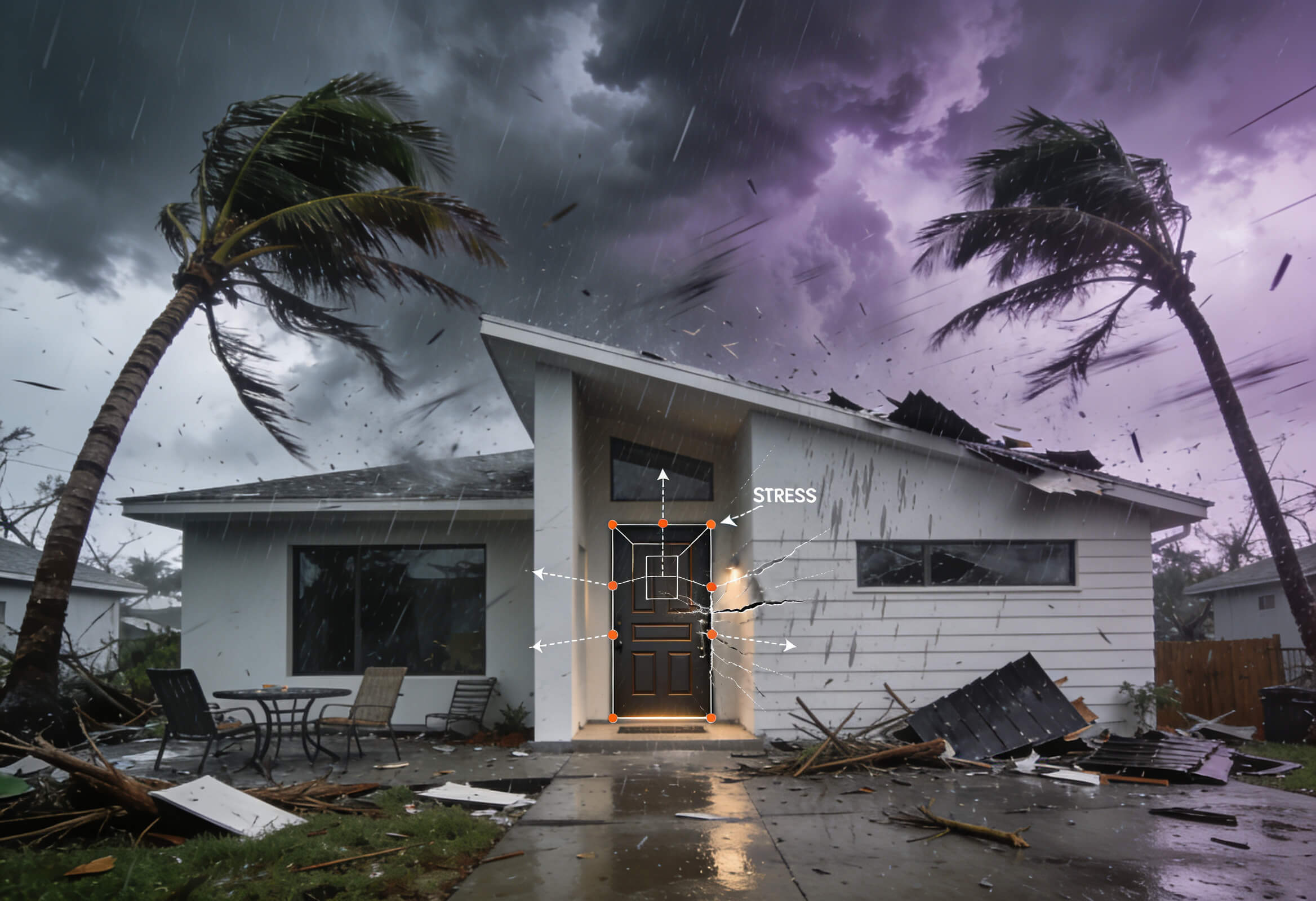
For Gulf Coast homes, a DP rating of at least DP50 is the recommended starting point. Homes in High-Velocity Hurricane Zones (HVHZ) - primarily South Florida and coastal areas subject to Miami-Dade County building codes - require doors that meet even stricter standards. Prestige Window and Door's breakdown of impact door materials and ratings notes that a door earning Miami-Dade Notice of Acceptance (NOA) has passed the most rigorous testing protocol in the country and is recognized across Florida's toughest building codes.
The Role of Laminated Glass
Glass panels are the most critical component in an impact door's performance. Standard glass shatters on impact, creating an immediate breach. Impact-rated glass is laminated - two or more panes bonded with a polyvinyl butyral (PVB) interlayer that holds the glass together even when it cracks. The door maintains its protective seal even after a direct debris strike.
Low-E coatings on impact glass also reduce heat transfer - a meaningful benefit in Gulf Coast climates where cooling costs run year-round.
? If you're comparing glass specifications - thickness, LOW-E options, and what the numbers actually mean - this breakdown is worth watching: Understanding Hurricane Impact Glass Types (7/16 vs 5/16 vs LOW-E) - Calleja's Windows and Doors
Fiberglass vs. Steel for Impact Doors
Both fiberglass and steel are used in impact-rated entry doors, and each has a distinct profile for Gulf Coast conditions.
Steel impact doors offer exceptional structural strength and resist bending under pressure that would compromise lighter materials. The trade-off in a coastal environment is corrosion - salt air accelerates rust along edges and hardware points, requiring diligent maintenance and marine-grade hardware.
Fiberglass impact doors handle the Gulf Coast climate more forgivingly. Fiberglass does not corrode, does not conduct heat as rapidly as steel, and resists the moisture exposure that comes with high-humidity coastal air. A high-quality fiberglass impact door with a factory-applied finish and stainless steel hardware is a strong long-term choice for most Gulf Coast homeowners. DSA Doors' overview of hurricane impact front doors highlights fiberglass as particularly well-suited for coastal installations where salt air is a persistent factor.
Miami-Dade NOA and Florida Product Approval: What to Look For
Two certifications matter most when shopping for an impact door. The Miami-Dade Notice of Acceptance (NOA) covers High-Velocity Hurricane Zones. The Florida Product Approval (FL#) applies more broadly across Wind-Borne Debris Regions. Both require the complete door system - frame, glass, hardware, and installation method - to be tested together as a unit.
Ask any supplier for the NOA or FL# before purchasing. A door without documented product approval offers no verified performance guarantee in a storm - legitimate impact doors will have a label or engraving indicating compliance. Elite Home Energy Solutions' comparison of Miami-Dade impact doors vs. standard doors outlines what these certifications mean for both code compliance and insurance purposes.
The Insurance Benefit Most Homeowners Overlook
Impact-rated doors do more than protect your home during a storm - they reduce what you pay to insure it year-round. Florida homeowners with fully protected openings can qualify for significant premium discounts after a wind mitigation inspection. Savings of 10 to 45 percent on hurricane coverage are common. The discount requires all openings to be protected and documentation of your door's product approval number to be on file with your insurer.
An Investment That Works Every Day
Impact doors are often framed as a storm preparedness expense, but they earn their value in quieter ways too. The laminated glass and reinforced frame reduce outside noise, improve thermal performance, and provide meaningfully stronger resistance to forced entry than standard doors. On the Gulf Coast, a quality impact-rated front door is not a luxury addition - it is the right door for the conditions your home actually faces.
Knockety carries front door options built with durability and performance in mind. Most Knockety fiberglass front door models are impact rated; a design rep will confirm yours. Knockety’s wood doors are not impact rated. If you are on the Gulf Coast and ready to replace your entry, it is worth having a conversation about what your opening needs - and what your door should be able to withstand.