
Solid Core vs. Hollow Core Doors: What’s the Difference?
Feb 20th 2026
When choosing a door, what is inside matters as much as what you see. Many homeowners focus on style and finish while overlooking construction. Door core type directly affects how a door feels, how it performs, and how long it lasts. Understanding the difference between solid core and hollow core doors helps you make a smarter decision for your home.
What Is a Hollow Core Door?
A hollow core door is built with a thin outer shell and a mostly empty interior. Inside, you will usually find a cardboard honeycomb or lightweight grid structure. This design keeps the door light and affordable. Hollow core doors are common in closets, secondary bedrooms, and utility areas.
According to Today’s Homeowner’s explanation of hollow core doors, this construction makes the door easy to install but limits its strength and sound control. Because there is very little mass inside, noise travels through hollow core doors easily.
What Is a Solid Core Door?
A solid core door uses a dense interior made from engineered wood or composite materials. The outer surface may be real wood veneer, fiberglass, or another durable skin. This construction gives the door weight and structure.
As explained in Lowe’s guide to solid core doors, the added density improves sound reduction and durability. Solid core doors feel more substantial when opened or closed, which many homeowners associate with higher quality.
Durability and Daily Wear
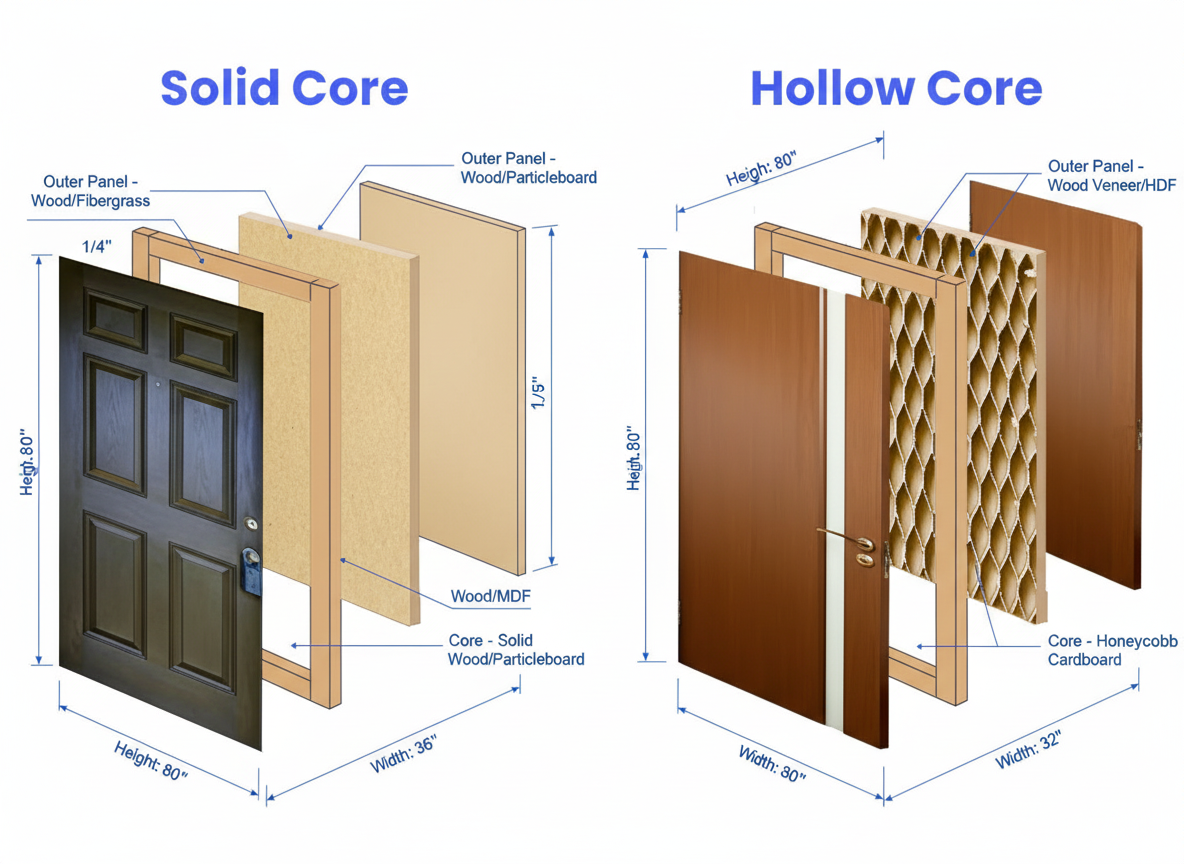
Durability is one of the biggest differences between the two door types. Hollow core doors can dent, crack, or puncture more easily because there is very little material behind the surface. Solid core doors resist damage better and hold their shape longer. A comparison from The Door Line on internal door construction confirms that solid core doors perform better in high-traffic areas. They are better suited for homes with kids, pets, or frequent use.
Sound Control and Privacy
Sound travels through air and vibration. Hollow core doors allow both to pass easily because of the empty interior. Solid core doors slow sound transmission by absorbing vibration. Research referenced in Lowe’s interior door buying guide shows that solid core doors provide noticeably better noise reduction. This makes them a better choice for bedrooms, bathrooms, home offices, and media rooms.
Insulation and Comfort
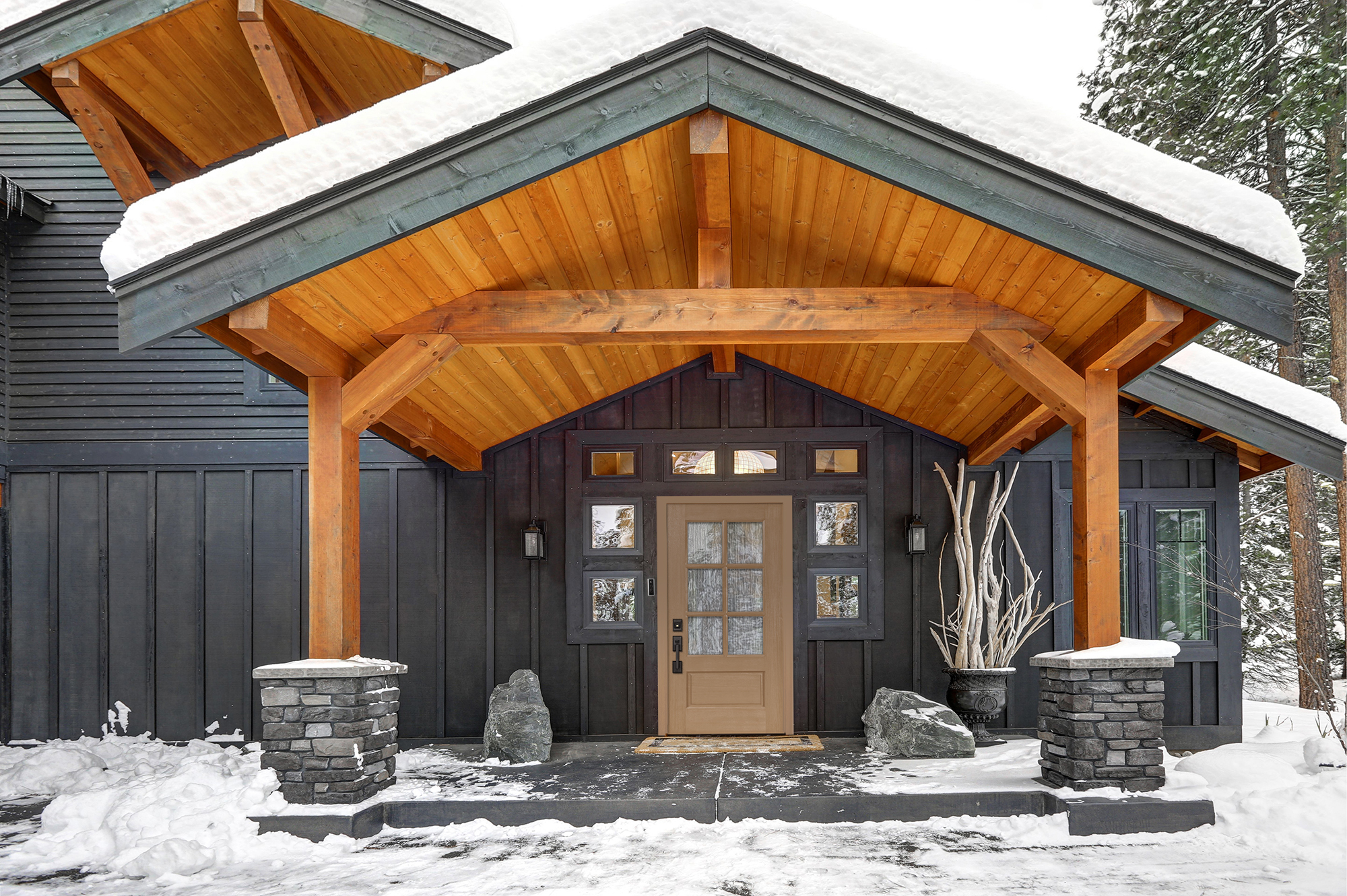
Door core construction also affects temperature control. Solid core doors help reduce drafts and heat loss because they contain fewer air gaps. Hollow core doors offer minimal insulation and may feel colder to the touch in winter. According to Deluxe House’s overview of door core performance, denser materials improve both thermal performance and comfort. This difference becomes more noticeable near exterior entries or rooms that require consistent temperatures.
Cost and Installation Considerations
Hollow core doors cost less because they use fewer materials. They are also easier to lift and install. This makes them appealing for quick replacements or budget-focused projects. Solid core doors cost more and weigh more. Installation may require extra help or stronger hinges. However, JELD-WEN’s breakdown of door core types notes that the added cost often pays off through longer lifespan and better performance.
Hollow core doors work best in low-impact spaces such as closets, storage rooms, and guest rooms. They meet basic needs without adding unnecessary expense. Solid core doors are better suited for spaces where privacy, noise control, and durability matter. Bedrooms, bathrooms, offices, and entry points benefit from the added mass and strength.
Exterior Doors and Core Construction
Hollow core doors are not appropriate for exterior use. Exterior doors require strength, insulation, and security. Solid or composite cores are essential for handling weather exposure and energy efficiency.
Guidelines from Lowe’s exterior door resource explain why dense cores are required for exterior doors. These doors must resist moisture, temperature swings, and forced entry.
To conclude, for interior spaces where performance matters, solid core doors provide long-term value. For exterior entries, a solid core is essential. Understanding this difference helps you invest where it counts. Knockety front doors are built with strength and performance in mind. When your door is solid at its core, it shows in how your home feels every day.