
Best Front Door Materials & Finishes for South-Facing Entries
Mar 27th 2026
A south-facing front door gets more direct sunlight than any other orientation. While that makes for a bright, welcoming entry, it also puts your door through a daily cycle of heat, UV exposure, and thermal stress that accumulates fast. The wrong material or finish fades, warps, or degrades far sooner than expected.
Why South-Facing Doors Are Different
The sun tracks east to west, but south-facing surfaces receive direct solar radiation for the longest stretch of the day. In most of the continental United States, a south-facing entry absorbs six to eight hours of direct sunlight daily — far more than any other orientation.
UV rays break down pigments, paint binders, and door surfaces at a molecular level. Heat amplifies the damage by driving expansion and contraction cycles that stress seals, joints, and finishes over time. A door that holds up well on a shaded north-facing entry can show visible wear within a year in full sun.
Plastpro's overview of direct sunlight and door performance identifies south-facing entries as one of the most demanding environments for any exterior door material.
Fiberglass: The Smart Choice for Full Sun
Fiberglass is the strongest performer for south-facing entries. It resists warping, cracking, and fading better than wood, and it expands and contracts far less than steel when surface temperatures climb. A quality fiberglass door holds its finish longer under sustained UV exposure than most alternatives.
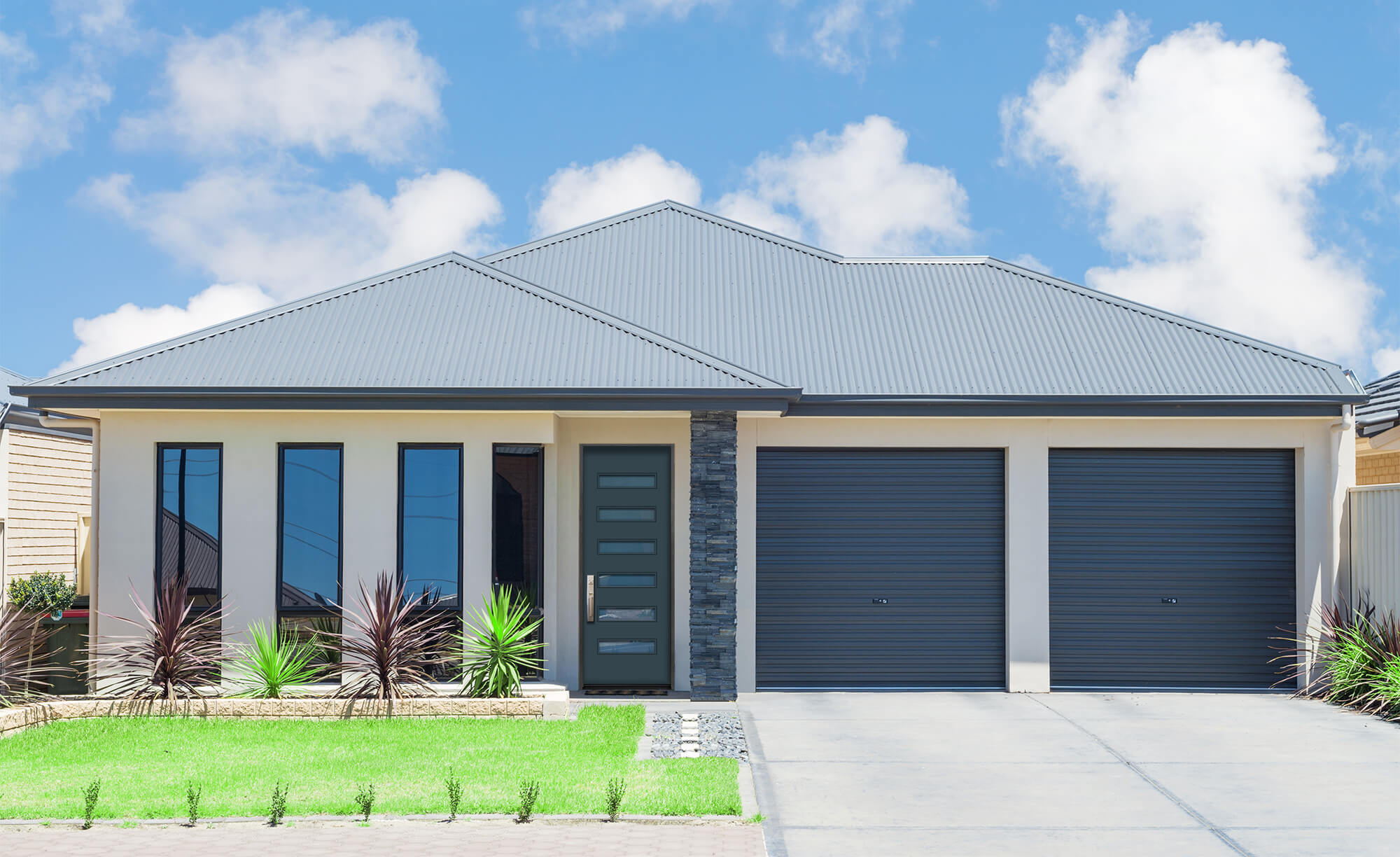
That said, lower-grade fiberglass can yellow or turn chalky over time as the gel coat breaks down. The key is choosing a door with a factory-applied UV-resistant finish rather than a field-painted surface — higher-end options replicate wood grain convincingly with far less upkeep.
Steel Doors: Durable, With Caveats
Steel doors are strong, secure, and resistant to warping. They do not degrade from UV exposure the way wood does. The issue is thermal conductivity — a south-facing steel door can reach extremely high surface temperatures on sunny days, putting sustained stress on paint, weatherstripping, and adhesive components. Dark-colored steel doors amplify this problem considerably. Clopay's guidance on preventing sun damage recommends lighter finishes for steel doors in high-sun locations to keep surface temperatures manageable and slow the rate of finish degradation.
Wood Doors: High Beauty, Higher Maintenance
Wood remains one of the most visually compelling front door options. In south-facing applications, it demands more attention than any other material. UV radiation attacks wood at a cellular level, breaking down lignin and causing fading, cracking, and surface degradation even in premium hardwoods like mahogany and white oak.
A well-chosen hardwood door can hold up in full sun with the right finish and a consistent maintenance schedule. The challenge is that re-coating must happen regularly — typically every one to two years — to stay ahead of cumulative damage. The Woodworkers Journal's breakdown of exterior door finishes explains why marine-grade varnishes and penetrating oil finishes outperform standard sealers in high-UV environments.
The Finish Matters as Much as the Material
Even the most durable door material can fail prematurely with the wrong finish. Opaque paint outperforms clear coatings in UV resistance because pigments block light from penetrating into the surface. Transparent and semi-transparent finishes allow UV to pass through and accelerate breakdown from beneath.
When using paint, look for exterior formulations specifically labeled UV-resistant or fade-resistant. For wood, marine-grade varnishes containing UV inhibitors perform well and are built for sustained outdoor exposure. Fine Woodworking's discussion on UV-protective finishes highlights formulations made with free radical scavengers — compounds that actively interrupt the UV degradation process and extend finish life considerably.
Color Makes a Bigger Difference Than Most Homeowners Realize
Dark door colors are popular for curb appeal, but they absorb significantly more solar energy. A black or deep navy door can reach surface temperatures far higher than a white or warm gray door under identical conditions, accelerating finish breakdown and stressing both the core material and hardware.
Lighter colors at the same finish level will consistently hold up longer on south-facing entries. If a bold color is a priority, pairing it with a UV-resistant topcoat and architectural shade extends its life without compromising on style.
Add Shade Where You Can
An overhang, covered porch, or awning changes the equation meaningfully. Even partial shade during peak sun hours reduces surface temperature and limits the window of direct UV exposure the door faces each day. Framewell's guide to sun and heat protection for front doors notes that a modest overhang can reduce sun-related wear significantly, regardless of door material — and it extends the life of whatever door you install.
Choosing the Right Door for Your Entry
South-facing entries demand more from a front door, but the right choices make that demand manageable. Fiberglass with a factory UV-resistant finish gives you the strongest starting point. Steel performs reliably with care around color selection. Wood holds up beautifully with proper maintenance on a consistent schedule. In every case, the finish and color you choose matter as much as the material itself.
Knockety offers a wide range of fiberglass and solid wood front doors designed to perform in demanding conditions. When your door is built to handle the sun, your entry stays sharp no matter which direction it faces.